
My Spanish is clumsy. Words fall from my lips before I have a chance to correct them, convoluding my meaning and clouding any understanding. It’s not graceful, it’s not pretty, and it’s not how I like to be seen.
But I’ve come farther with it than I ever expected. Spanish was never something I factored in completely when I deicded to come to a Spanish speaking country.
–“You’re really brave to come here without knowing the language.”
–“‘Stupid’ might be a more apt description.”
It’s a typical conversation I had in my first few months here. I think it’s pretty spot on. I haven’t come out fluent (not that I ever expected that), but I’ve come out of it functioning. I can get by, I can have short conversations. I can function. I’ve become enamored with the thought of learning more, though.
One thing this dual language world of mine has done has inspired a small passion for words — it’s made me appreicate my own language immensely, and has kindled a curiosity for another that I don’t want to die once I return to the US in 40 days. It makes sense. I’ve met many people who claim a love for words, and when I think back on it, most of them speak more than one language. It makes you think about connections, about how words are formed — it makes you think in a different way. I’ve been reading more, writing more, playing around with words in my own language that I did before.
I dunno. Just a thought.
I’m feeling sad today. Rhyme? Reason? None. Maybe it was seeing that “40 days” countdown on my phone. Maybe it was the Duoc party last night that reminded me that while a lot of this is total bullshit, the relationships and the community we’ve built are real and will be broken in just a few weeks.
I got incredibly lucky with my school. For one, it’s location is amazing, just a couple blocks from the presidential palace. We have everything around here, and I rarely need to leave. And, it’s an old mansion. It’s ancient feeling architecture inspires visions of the lives this place has held before, and boy do I love to just think about it when my students are busy working at it.
But on top of that, my coworkers are really amazing, from the other gringos to the young, wonderful Chileans I’ve come to love so much, the relationships I have here keep me smiling throughout the day. They completely make up for some of the not-so-awesome aspects of this job.
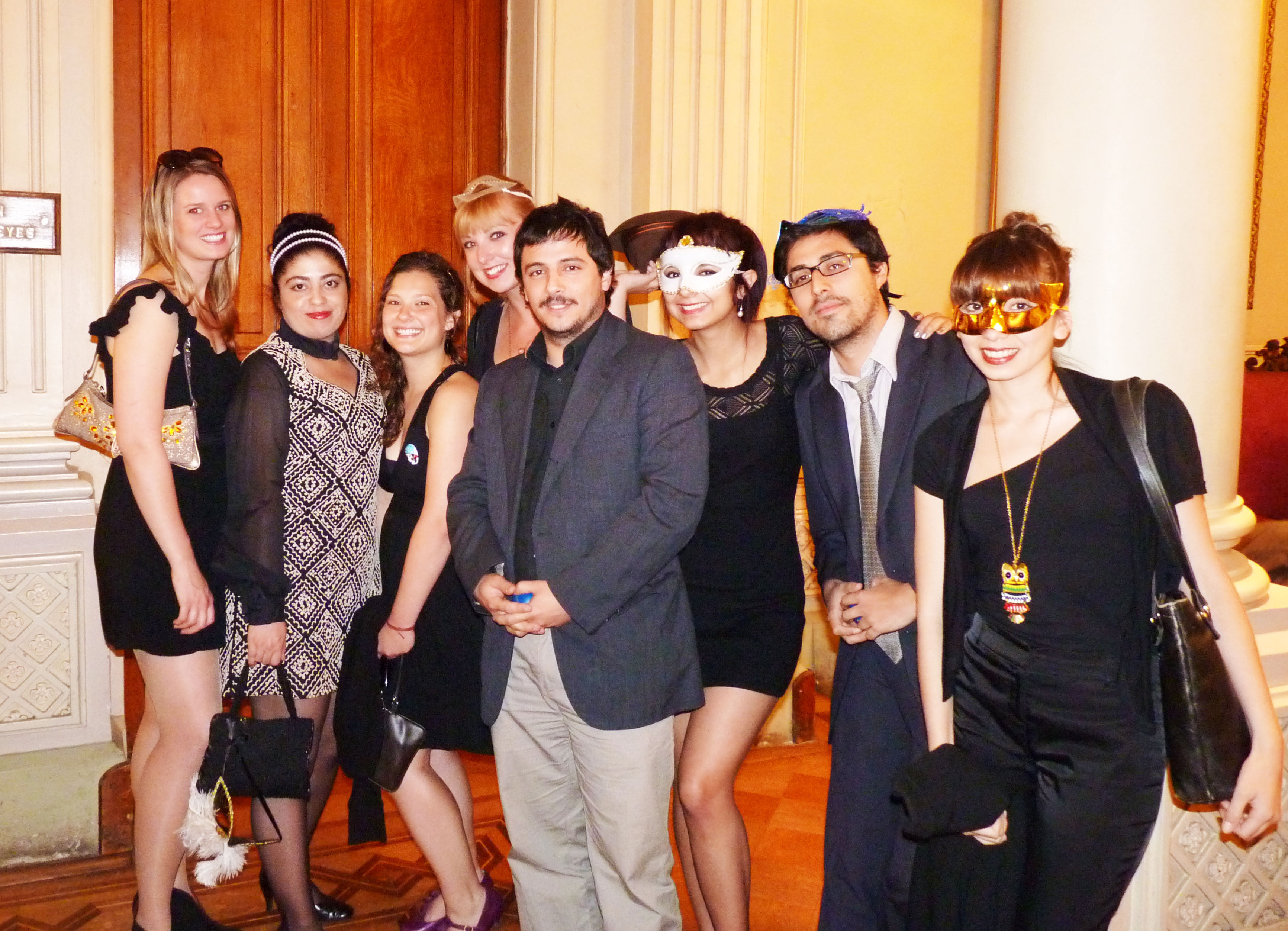
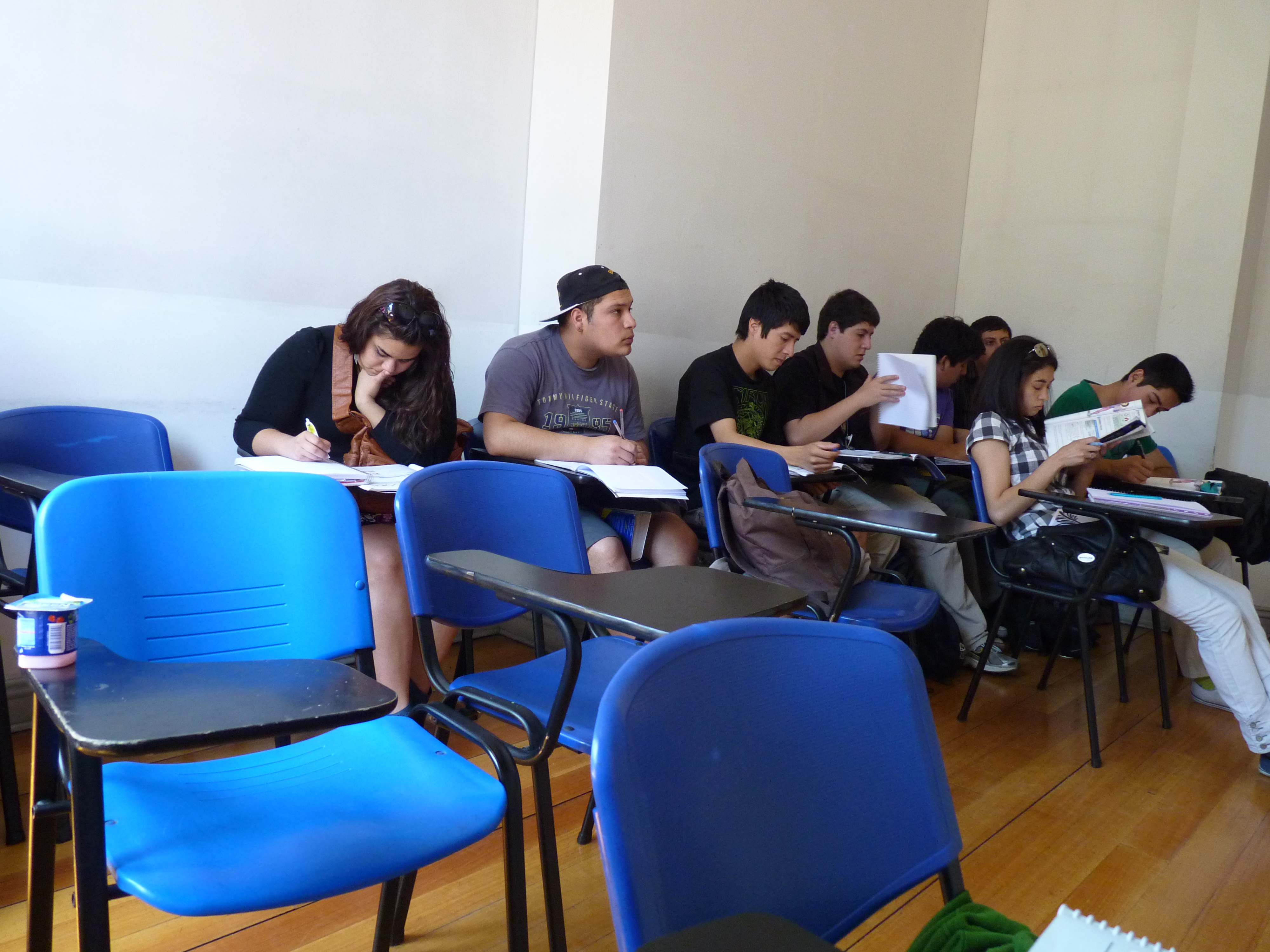
Duoc is an odd place. Sometimes it feels like chaos. Sometimes I want to strangle everyone. Sometimes I hate my students. Sometimes I imagine the medieval methods of ruler slapping and dunce caps aren´t such a bad idea. Sometimes it smells like a ridiculously disgusting dump.
And then other times, I can´t stop smiling. My students can be pretty cool. They’re funny, they’re clever, they’re so sweet. It’s funny, really, because when I first got here, I did not, did not, did not give a crap about the teaching thing.
On one of the training days, one of the guys in my program came up to me with a video camera.
“Why did you want to teach English in Chile?” he asked me.
“It was a means to an end, but don’t tell TeachingChile that,” I’d said with a chuckle.
“Just wait until you’re finished. You’ll be singing a different tune,” he told me.
And I’m not finished yet, but I’m already singing a different tune. I’ve gone from hating this job, to tolerating, to loving it, and all up and down the same spectrum, over and over and over.
I felt like a traitor on day one of classes. After seventeen years of being a student crammed behind a desk, there I was, standing in the front. I was going to be the one assigning homework. I was going to be the one marking attendence, giving low marks, and failing students.
Here are some of my favorite moments from this past semester.
Today, intermediate 2: I’m looking over rules that students are writing for staff and passengers on their imaginary cruise ships.
Staff can take drugs, drink alcohol, and do orgies in the jacuzzi.
“I think that you mean ‘can’t’ here,” I told him.
“No, eso. Lo pueden.” Uh, okay then.
Staff can throw disgusting people in the sea.
“I don’t think I want to go on your cruise….” I said.
“No? Okay, I change it for you.”
Three weeks ago, basic 2: Me: “Okay, guys, what does ‘beautiful’ mean?”
Them: “Hermoso!” “Bonito!” “Lindo!” “Delicioso!”
Me: “Hold up, hold up, hold up. ‘Delicioso’ does NOT mean beautiful.” I proceeded to tell them about my hatred of the word. You see, sometimes (every day) when I walk the streets of Santiago, men leer. I’m a pretty blonde girl, and they like pretty blonde girls. I really hate it, but I’ve gotten used to it by now, but one thing still gets to me. Men will walk by and whisper in my ear, “Deliciosaaaaa.” Delicious. Fucking “delicious.” They think I’m DELICIOUS. They want to taste me. It skeeves me out, and it’s gross.
My students got a kick out of it. They thought that was hilaaarious. So I’d made it clear: if you pass an English speaking girl on the street, don’s say that.
Later that day, we were going over adverbs.
One kid: “Miss, you are extremely, extremely, extremely beautiful.”
Another, nodding. “Sipo. Delicious.”
I about died.
October 5, intermediate 2: A student brings me a birthday present. Lots and lots of chocolate. Wrapped up in proper wrapping paper. Blushes when I hug him and say “thank you.”
Those are just a few. Do they make me want to be a teacher forever? Nope. I don’t think it’s for me. But they add to this experience so much more than I expected them to, and I love them for it.
Eso. Nothing else to dwell on.
 Jami Sheets