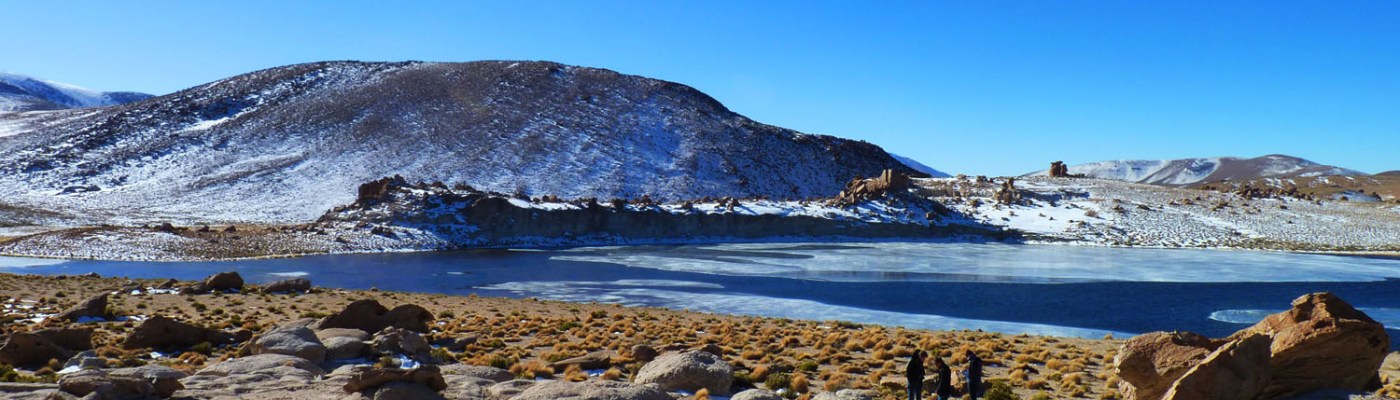
I took a winter vacation. Twenty days of travel in the north of Chile and into Bolivia. It was an incredible trip, so I thought, oh hey! I should share! In part so that I don’t forget myself…you know how I get sometimes.
So here goes.
Day one: On the road.
Unlike the very lucky Kortnee and Amy, who I was meeting in San Pedro de Atacama, I wasn’t able to fly. This left me with one option: the bus. It was a daunting bus ride, a slated 24 hours through the desert in the north.
But it wasn’t that bad. As is usually true with days consisting mainly of travel, it was largely uneventful. I simply had my phone/music player, Douglas Adams, and the scenery to keep me company.
Mostly, the only note worth making was the rolling into San Pedro as the sun was setting behind us. As I’d opted for the upper level window seat, I had complete views of the colored sky as we rolled over the orangey red hills. Right in front of me rose a fantastic full moon aside the perfect cone of Volcan Licanibur, both bright against the sinking canvas.
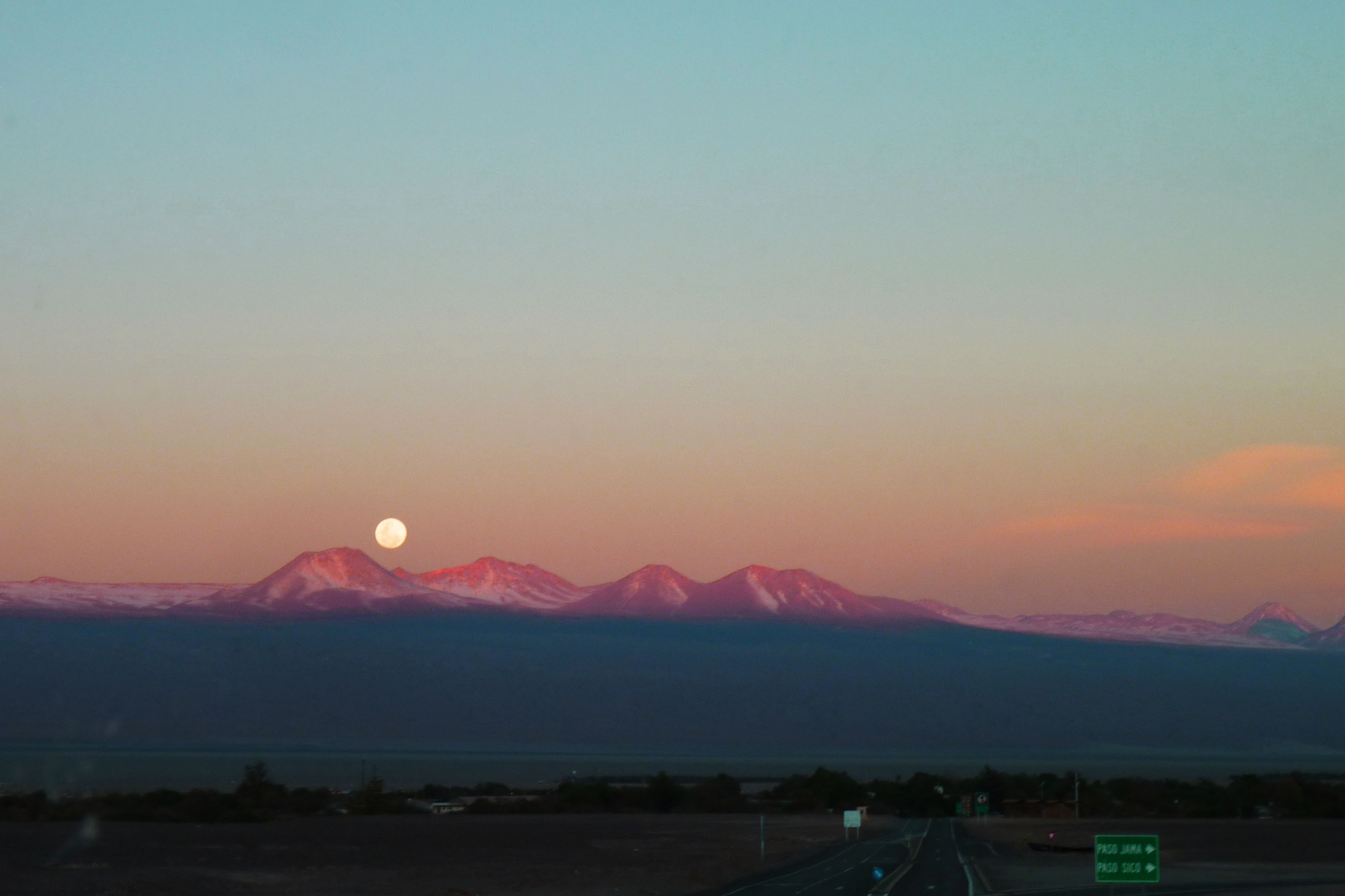
I wish that photo could capture how wonderful a welcome this was.
After catching up with Kortnee and Amy over a quick dinner, we settled into the hostel in San Pedro and made plans for our early departure the next morning into Bolivia.
Day 2: Into Bolivia
A hundred varying landscapes in the course of a few hours: mountains, to flatlands, to rolling hills, to rocky hills, to desert plains, salt flats, and endless hills. The only constant is the blazing sun and that striking blue, big sky, occasionally brushed with a thin white cloud or two.
Further east is one of the highest cities in the world. To the north lies the highest capitol city in the world. Farther still, the desert and mountains shift to jungle.
From my tiny glimpse, this is a beautiful country. Such a diverse landscape, kind people. I’m definitely leaving a piece of my heart here. (My journal, July 16, 2011)
We awoke incredibly early to the dark, frigid desert morning, dressing in the dark and gathering our things to meet with the rest of our group. After picking up nine more people, we were on our way to Bolivia.
Before I arrived, a very odd thing happened: it snowed. A lot. So much so that many of the typical attractions in San Pedro were closed, as was the typical pass from Chile to Bolivia. Our alternate route took us farther north, so the trip was a long one — entirely on a dirt road in rapidly rising altitudes. Having a strong stomach helped — I wasn’t the one who threw up in the bus. Instead, I was just mildly annoyed at the intense vibrations from our van and the the lingering smell of vomit.
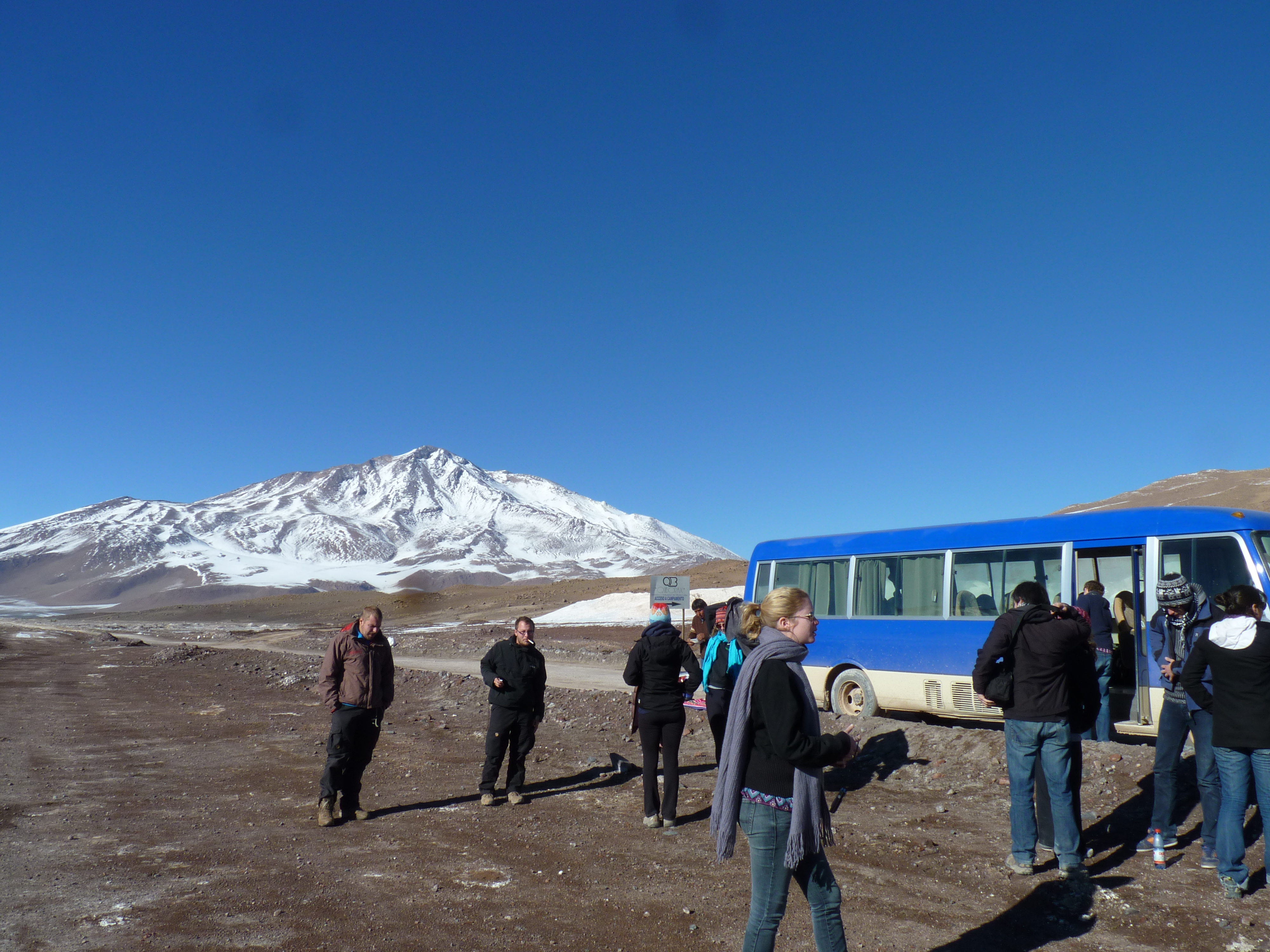
Somewhere in between Chile and Bolivia, we stopped for a mid morning picnic. We filed off, all twelve happy to have a few minutes to walk around without the jarring movement of the road. We munched on sandwiches, guzzled Nescafe, and played the getting-to-know-your-neighbor game among the mountains covered in icy snow. Not a terrible backdrop.
Later, at the border, I was almost denied exit from Chile — my Chilean ID had disappeared. After a bit of fear and panicking, I was allowed to leave. And before you knew it, we were in Bolivia!
Amy, Kortnee, and I made the move to snag the Jeep with the three most seemingly interesting companions on our tour. It turned out to be a good move, as Claus, Eoghan, and Andreas were lively and entertaining.
After endless driving, our first stop was a small lagoon.
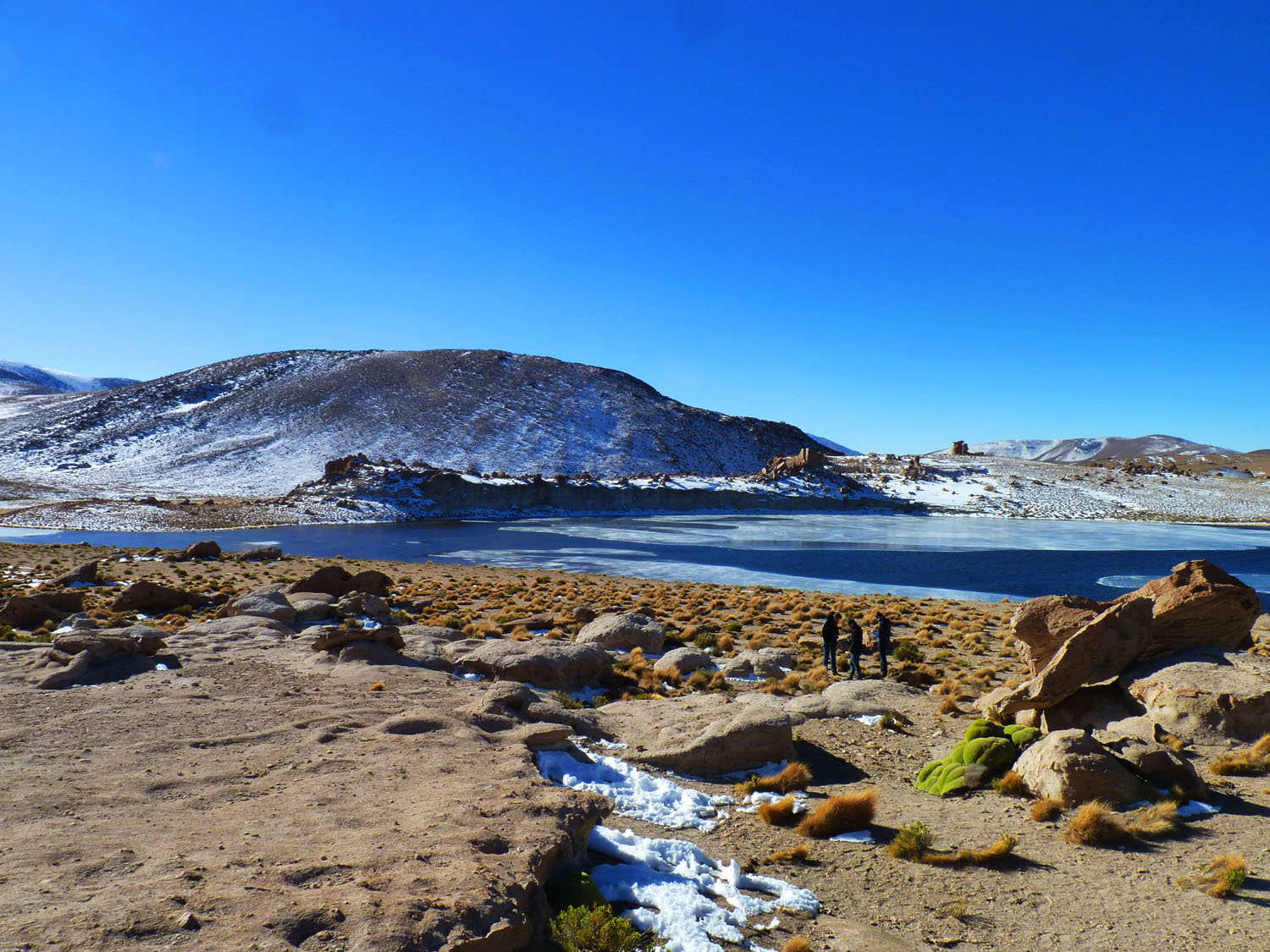
And later, a pee stop. There was a lot of peeing outside in Bolivia.
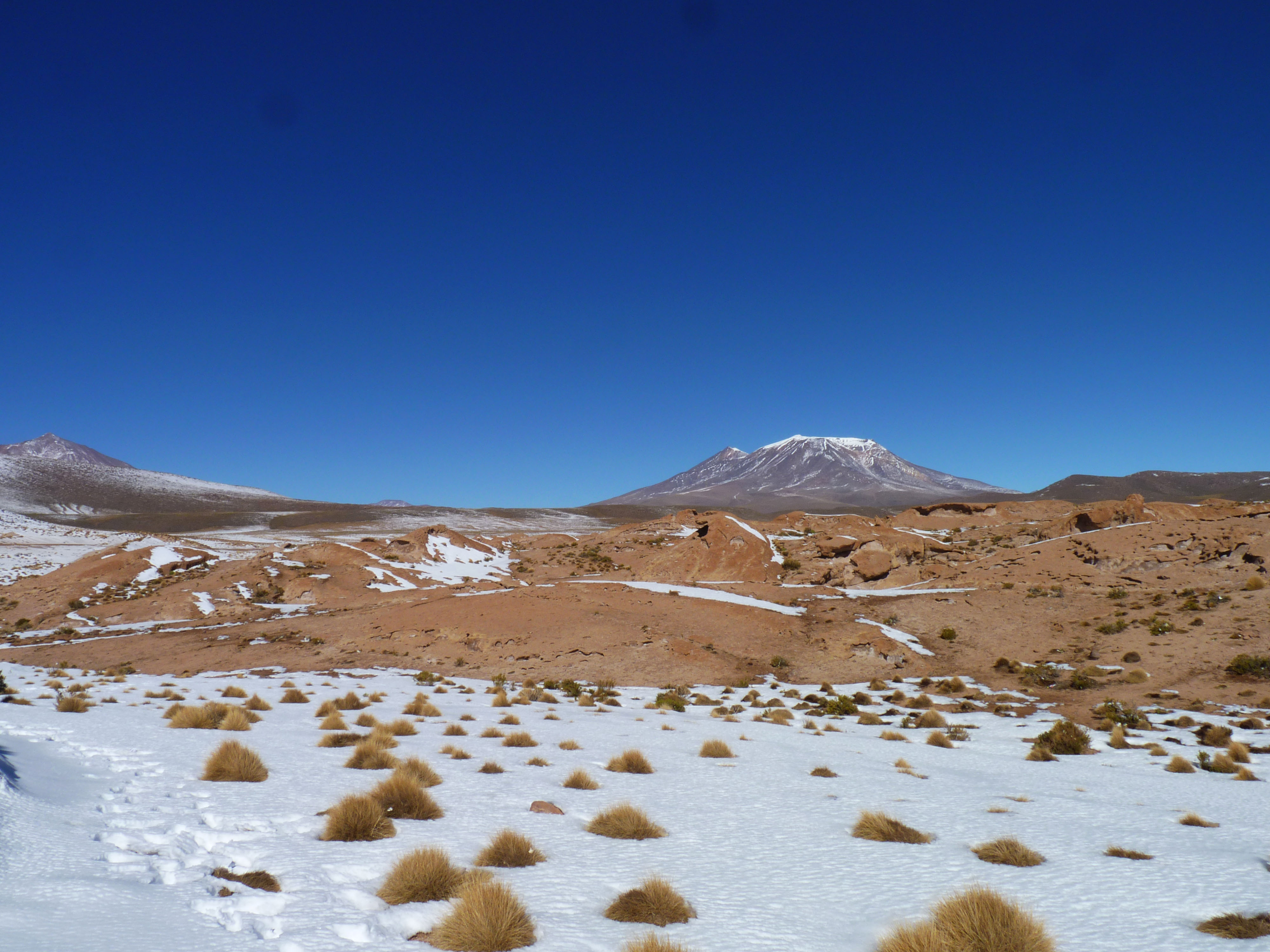
This? Not a bad place to pop a squat.
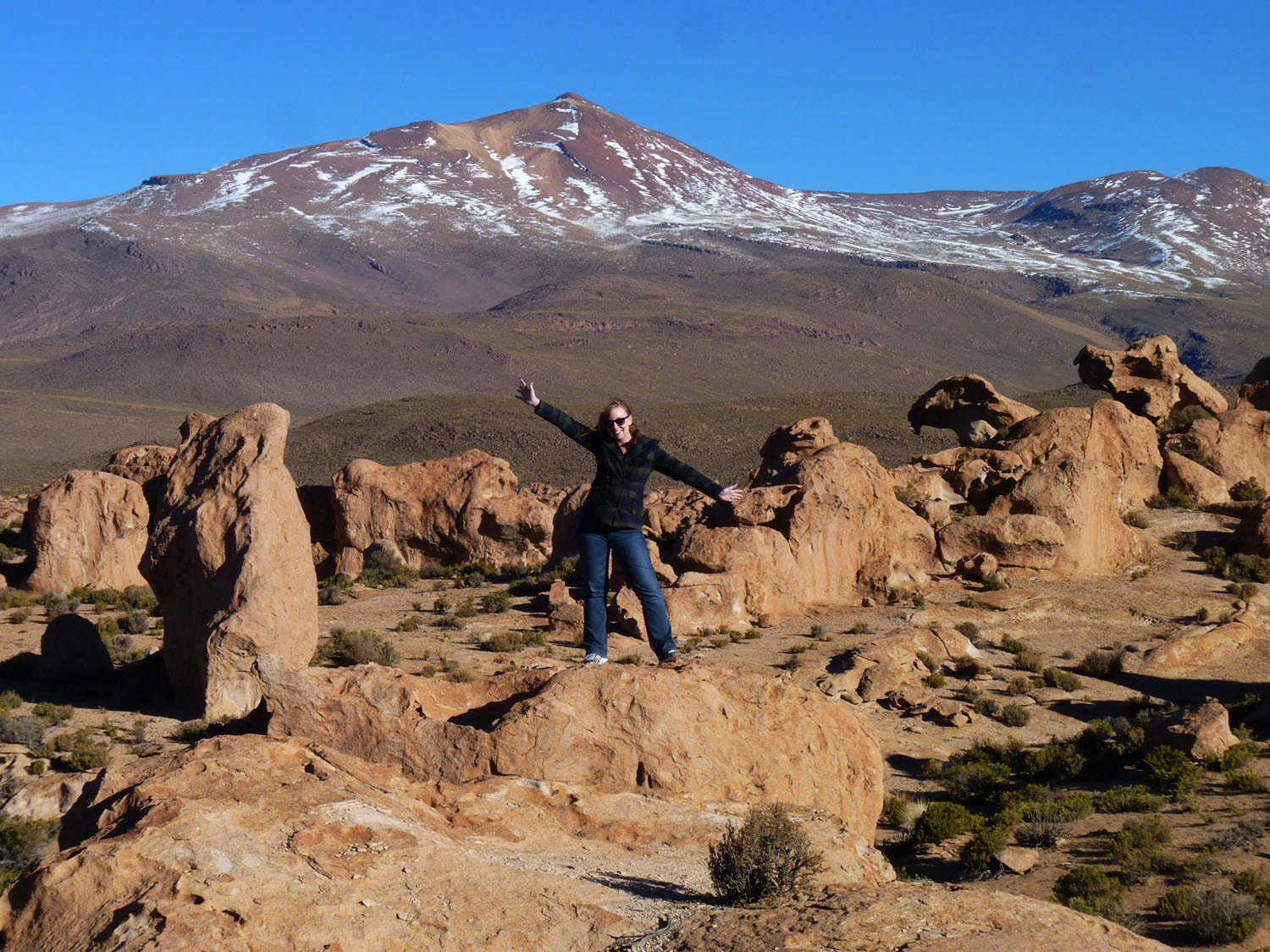
Later, Valle de las Rocas. Or, valley of the fun volcanic rocks that we got to climb and generally be five years old on.
We finished the day rather early when we rolled into a tiny, deserted looking town. The town, if I recall correctly, only had about 20 inhabitants, but seemed larger, if you’re going by a numbers of buildings kind of ratio. This disparity between inhabitants and habitations gave it an eerie vibe — but we pooled some money, bought some beers at the tiny, tiny general store, crowded around the all-too-necessary fire, hashed it out with our guides about the following day’s plan, and talked and drank into the night, trying to find the courage to leave the warm fire and crawl into our freezing beds.
It was a rough night’s sleep. With five blankets, two layers of socks, tights, and shirts, along with a facemask worn solely for its warmth — I was still not what you would call “warm.” But alas — we had another day to wake up early to.
Day three: San Cristobal, Pulacayo, termas
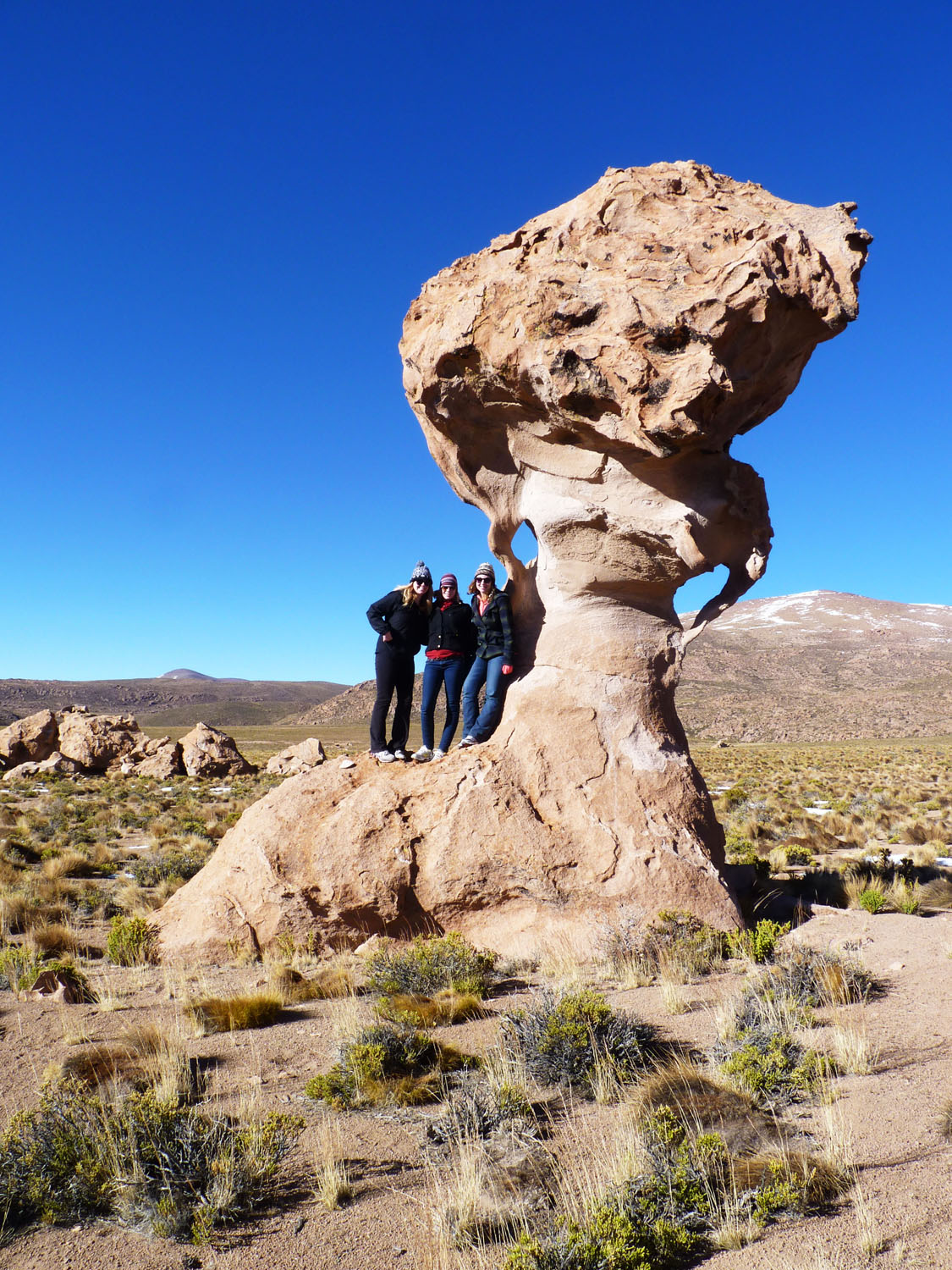
The next morning, we piled into our two Jeeps. We drove over the landscape, by llamas, vicunas, ostriches, and other animals to another valley of rocks. We were looking for something specific on this ride, though: a rock that looks like a tree! It was incredibly difficult to stay grounded on that ride as we climbed higher and higher in search of this rock. Kortnee and I, in the backseat, had to hold on to each other and anything around us to keep from being thrown into the front seat.
It was worth it though. It was kinda cool.
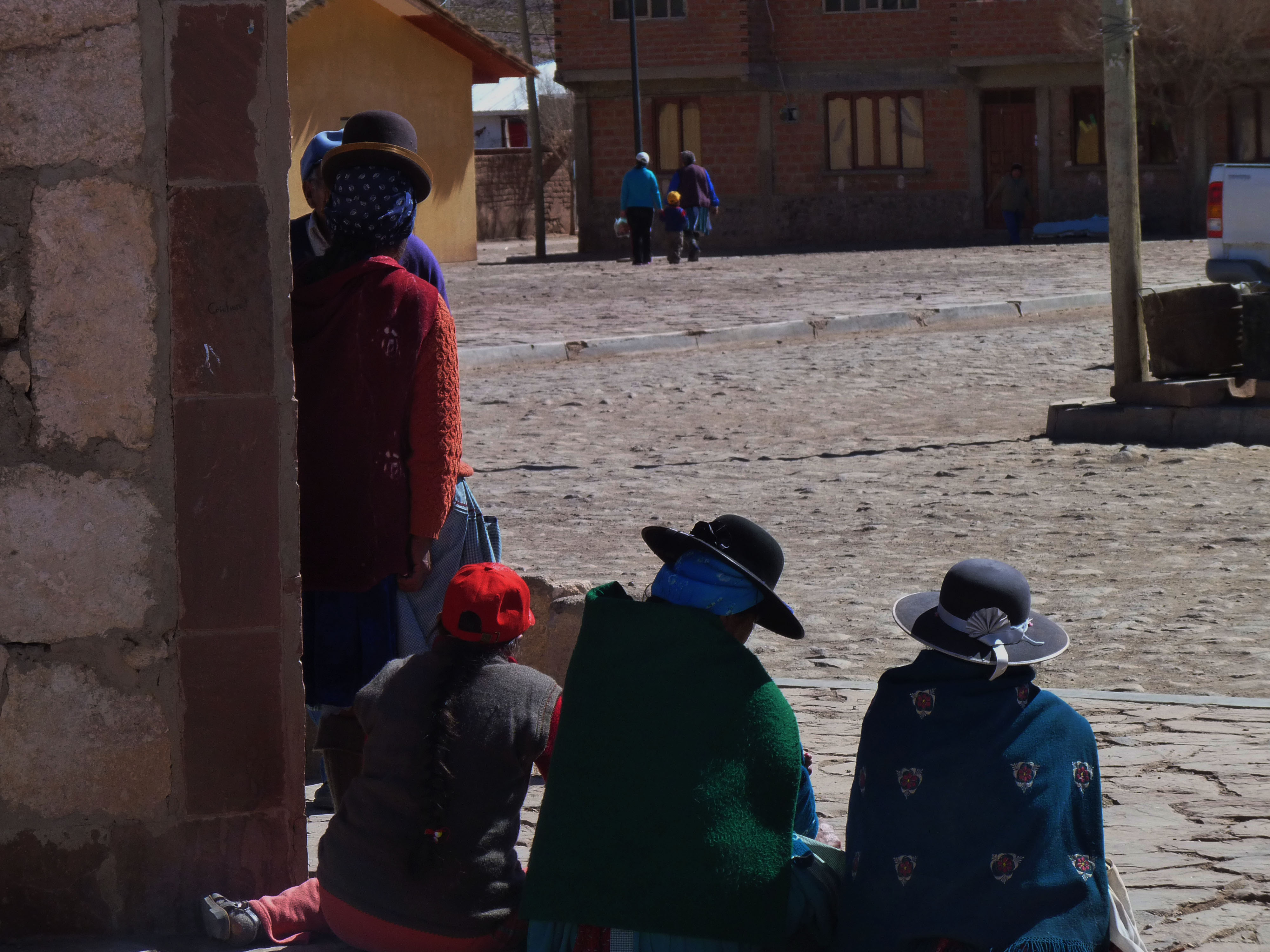
Then it was back to the “road”; we stopped in San Cristobal, a small mining town. The fact that Bolivian women wear the traditional clothing that I learned about in sixth grade kind of made my life.
From there, it was through Uyuni, the biggest city around, past Pulacayo, the abandoned mining town, and to the termas (hot springs!) where we had lunch. We were all a bit apprehensive, having been told they weren’t that warm — that was false. In the frigidity of Boliva, they were heaven. And, the setting was absolutely beautiful.
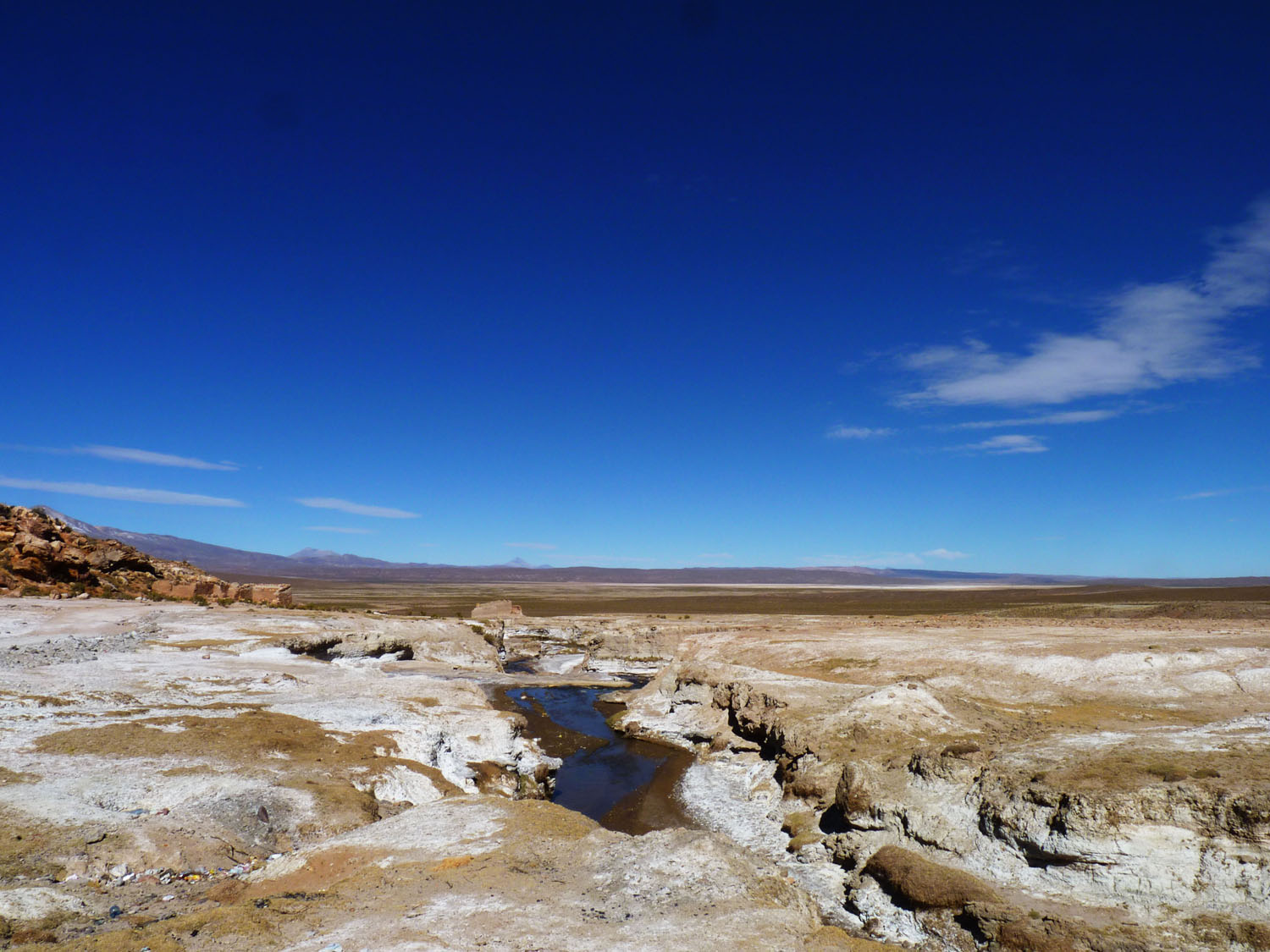
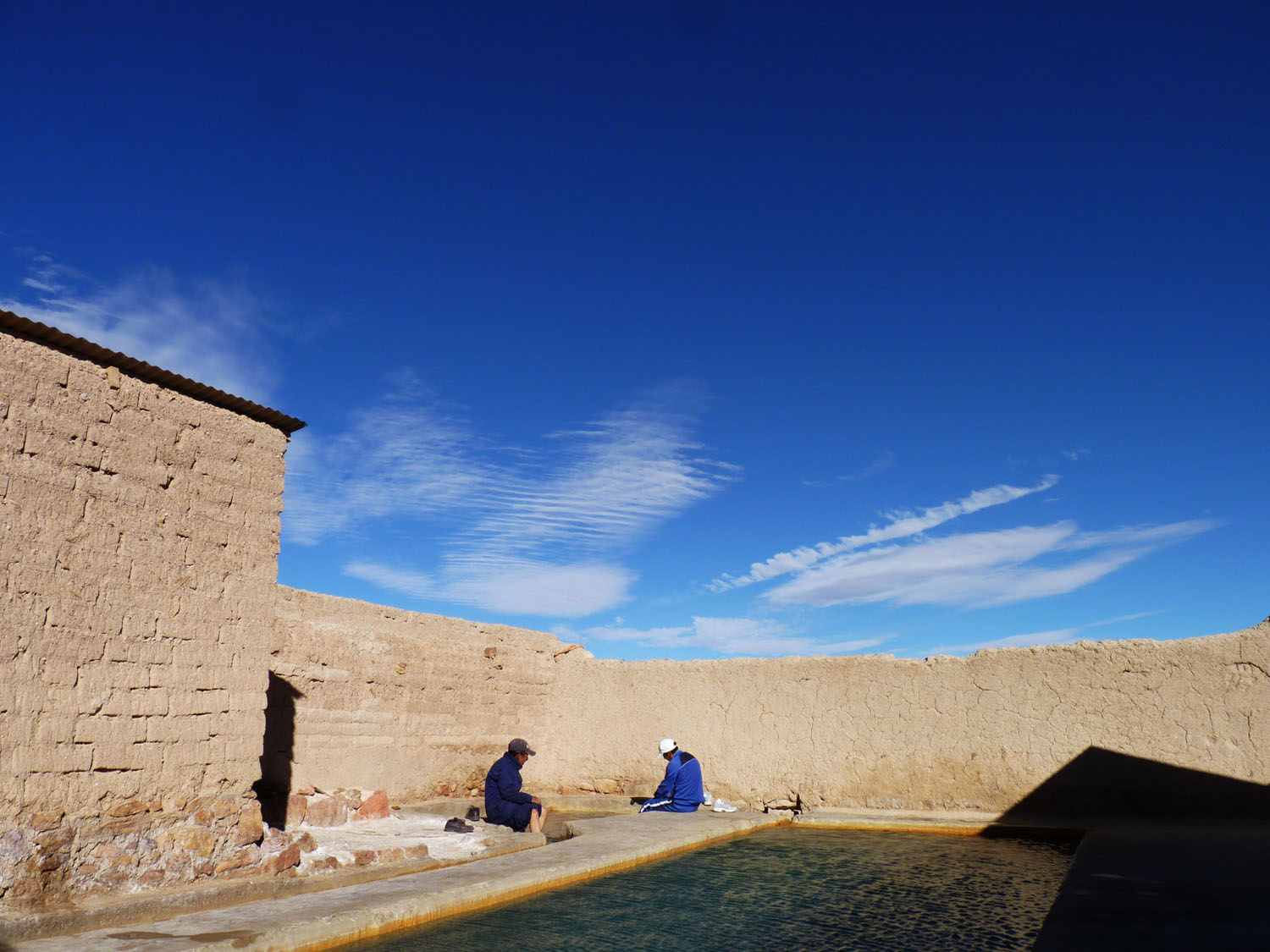
After we’d dried off and put on our millions of layers again, we headed to our next destination: Pulacayo, a silver mining town that was abandoned in the 70s.
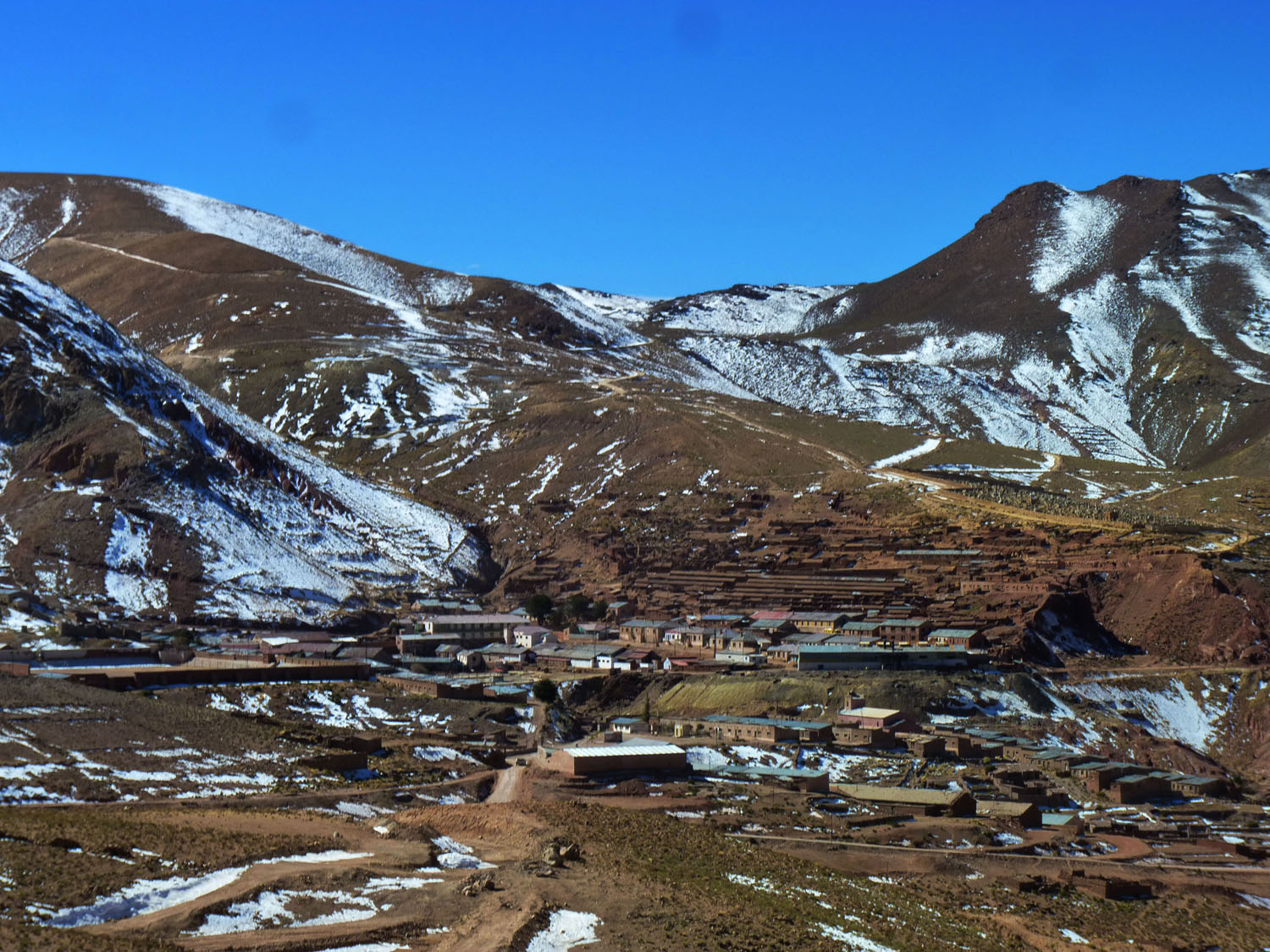
Pulacayo was probably the most fascinating part of our trip into Bolivia. Firstly, it’s the home to a bunch of old trains and train cars — including one that was robbed in Butch Cassidy and the Sundance Kid. I mean, that’s just cool.
But there’s more than that. Pulacayo used to be the prime silver mining town in Bolivia. It had an incredibly large population — something like tens of thousands, if I recall correctly. Now, it’s all but abandoned. We saw a few people around, mostly military. The mine was closed, and as the sun set, there was an eerie ghost town sort of feeling about it.
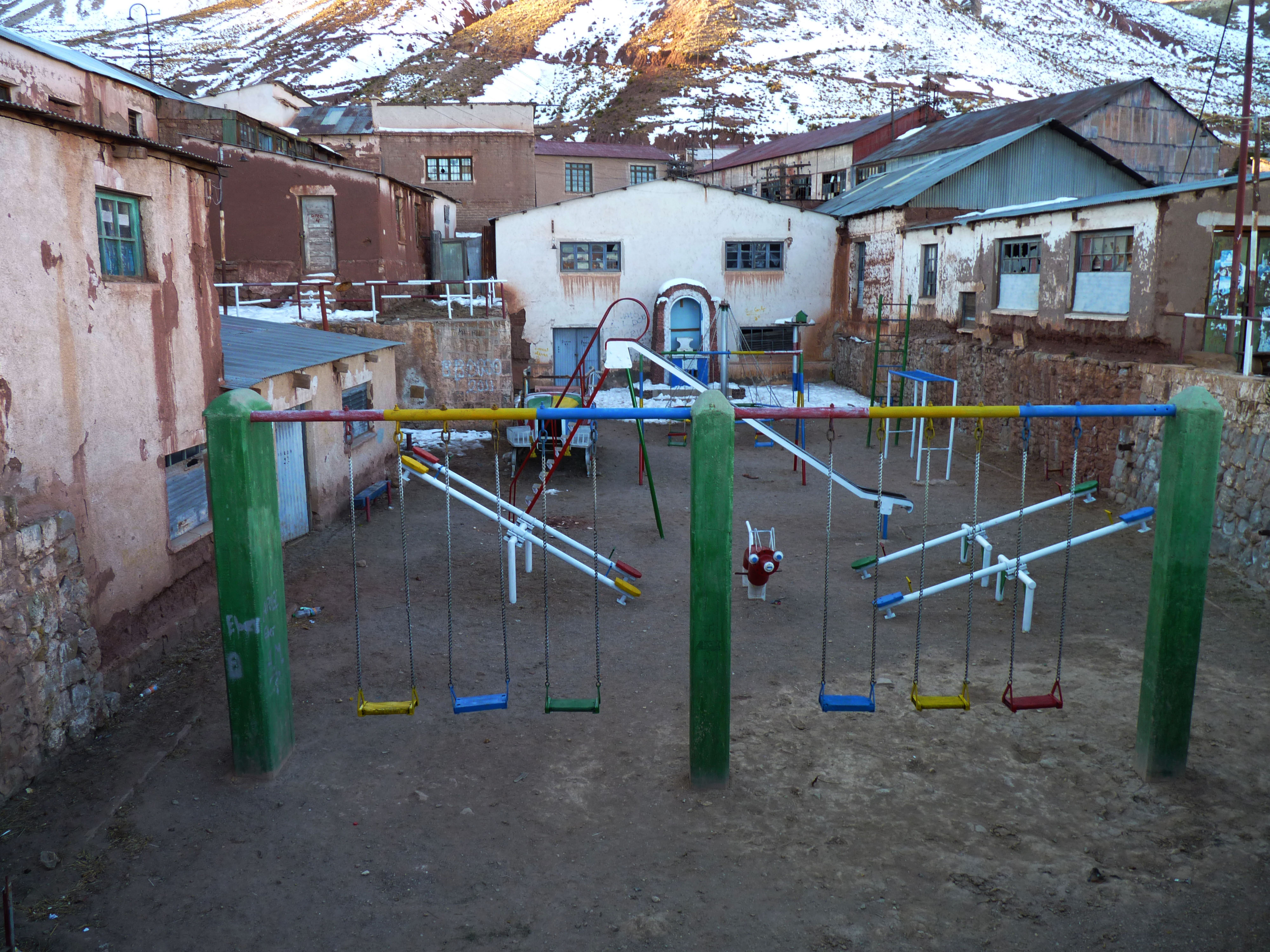
After our tour, we headed to our hotel in Uyuni.
(There was an amazing sunset)
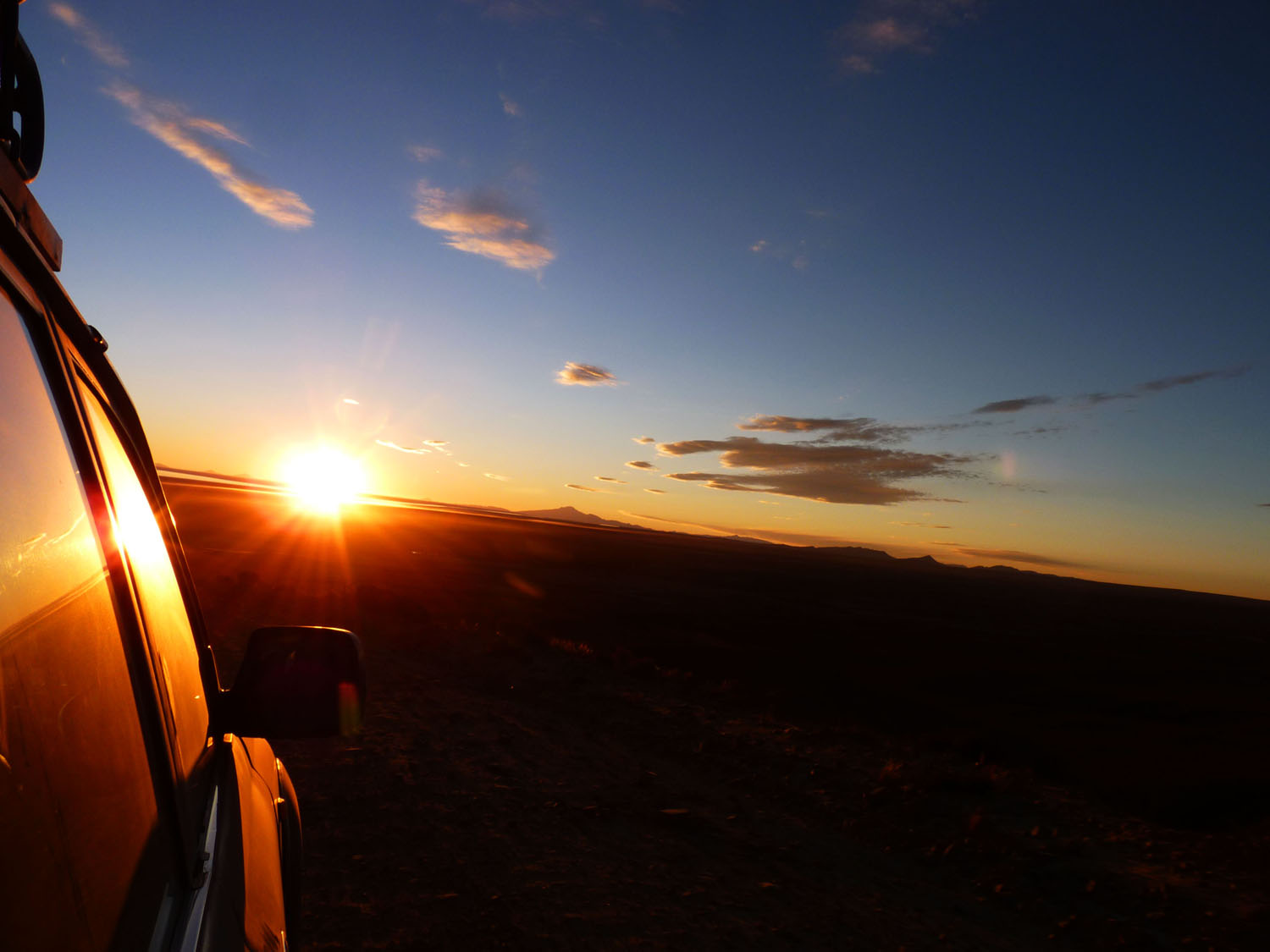
We had a warm dinner at an Italian restaurant, cheered along with locals to the Copa America match playing, and Kortnee and I went back to the hotel to sleep before our next big day: the salt flats!
Day four: getting our visas, Salar de Uyuni
The thing most of us had really signed up for was the Salar de Uyuni. It’s the largest, highest salt flat in the world, and it’s incredible.
But first, Kortnee, Amy, and I, plus two others from our group, had to take care of our visa situation. Because we’re Americans, we had to pay an entry of $135. We’d all planned on that, but, being that Bolivia isn’t known for being a rich, transparent, honest government, we also expected bumps — both in prices and in trouble.
Sure enough, once we finally found the people to open the office, there was trouble. Since we didn’t have our yellow fever vaccinations, the man smiled broadly and declared that we’d have to pay a fine. Luckily, it was only $5.000 Chilean pesos each — not that it was an official fine. We’re fairly certain that money went straight into his pocket.
Anyway, we finally got to go to the salt flats. Pictures are better than words, for the most part.
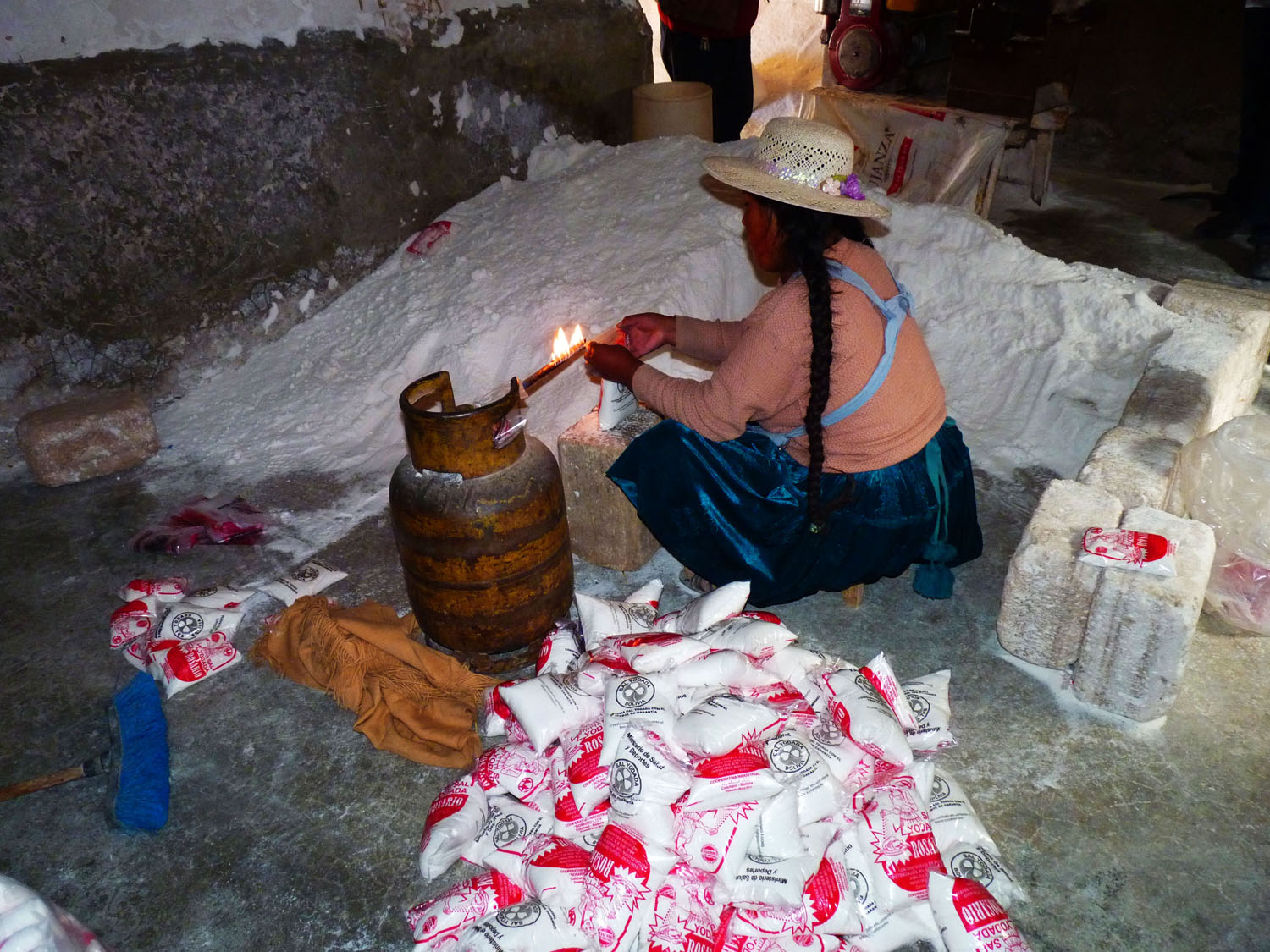
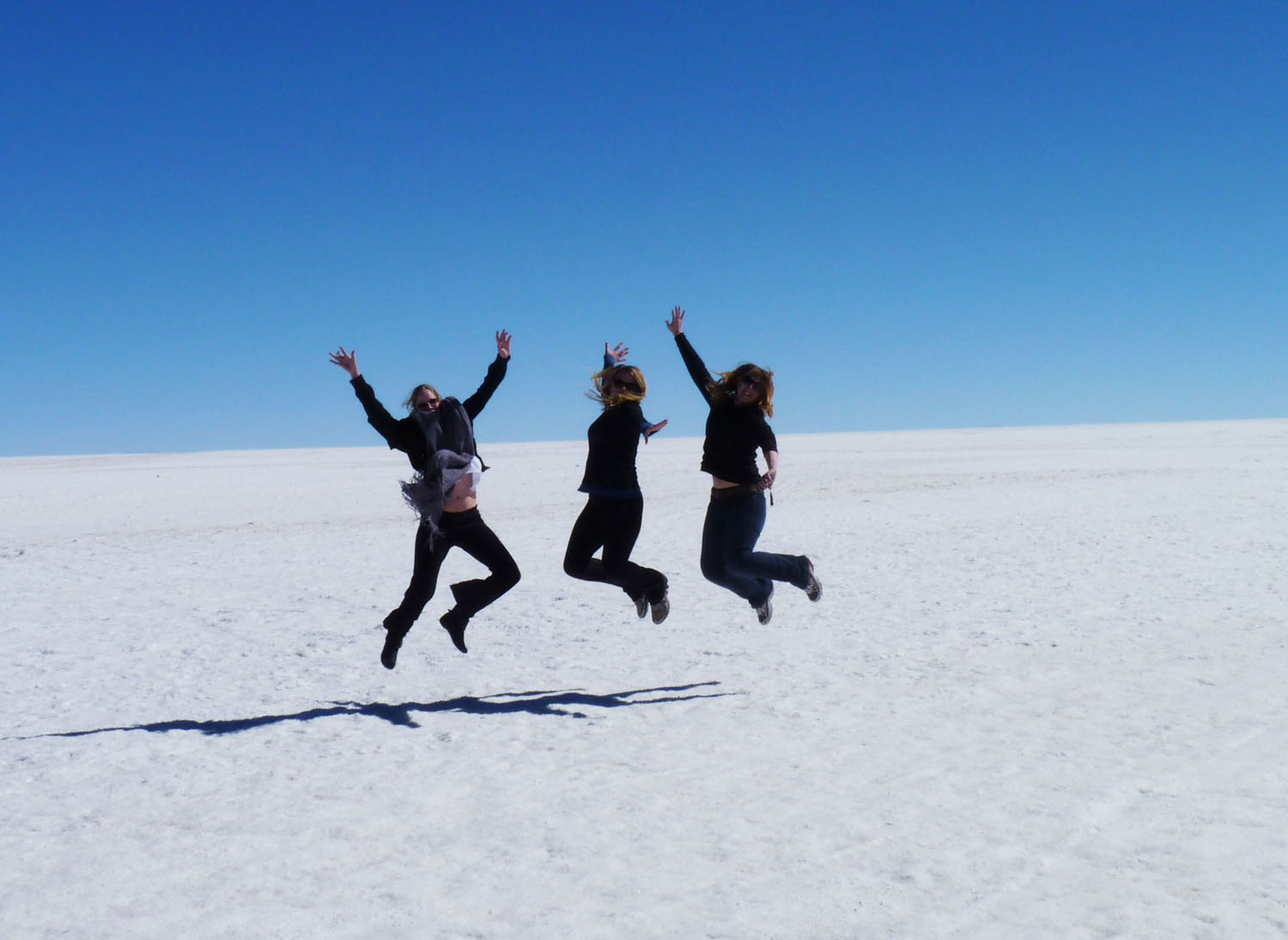
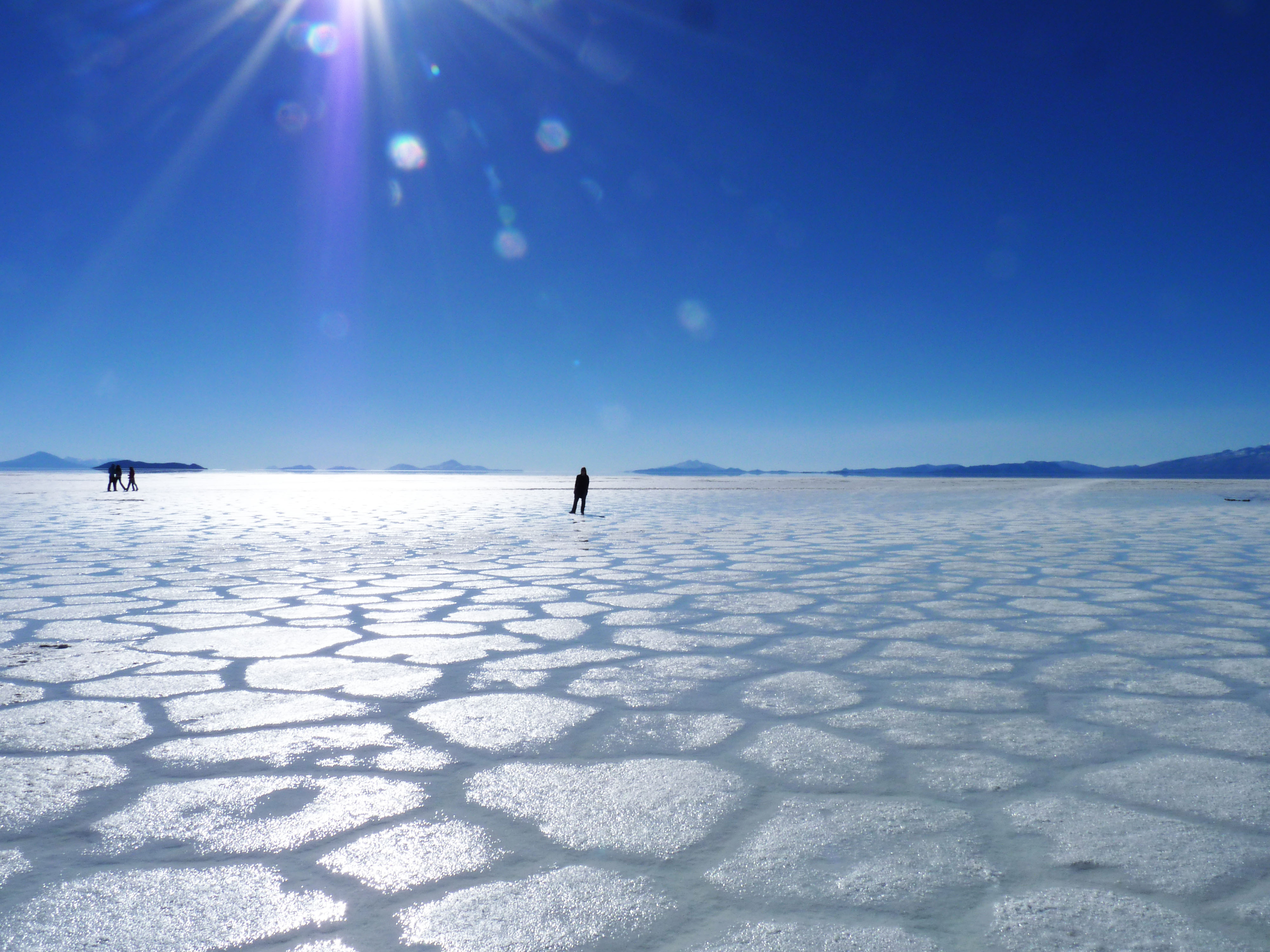
There was an island where we had lunch. Beautiful views, despite the difficulty in ascending — it was a battle with the altitude.
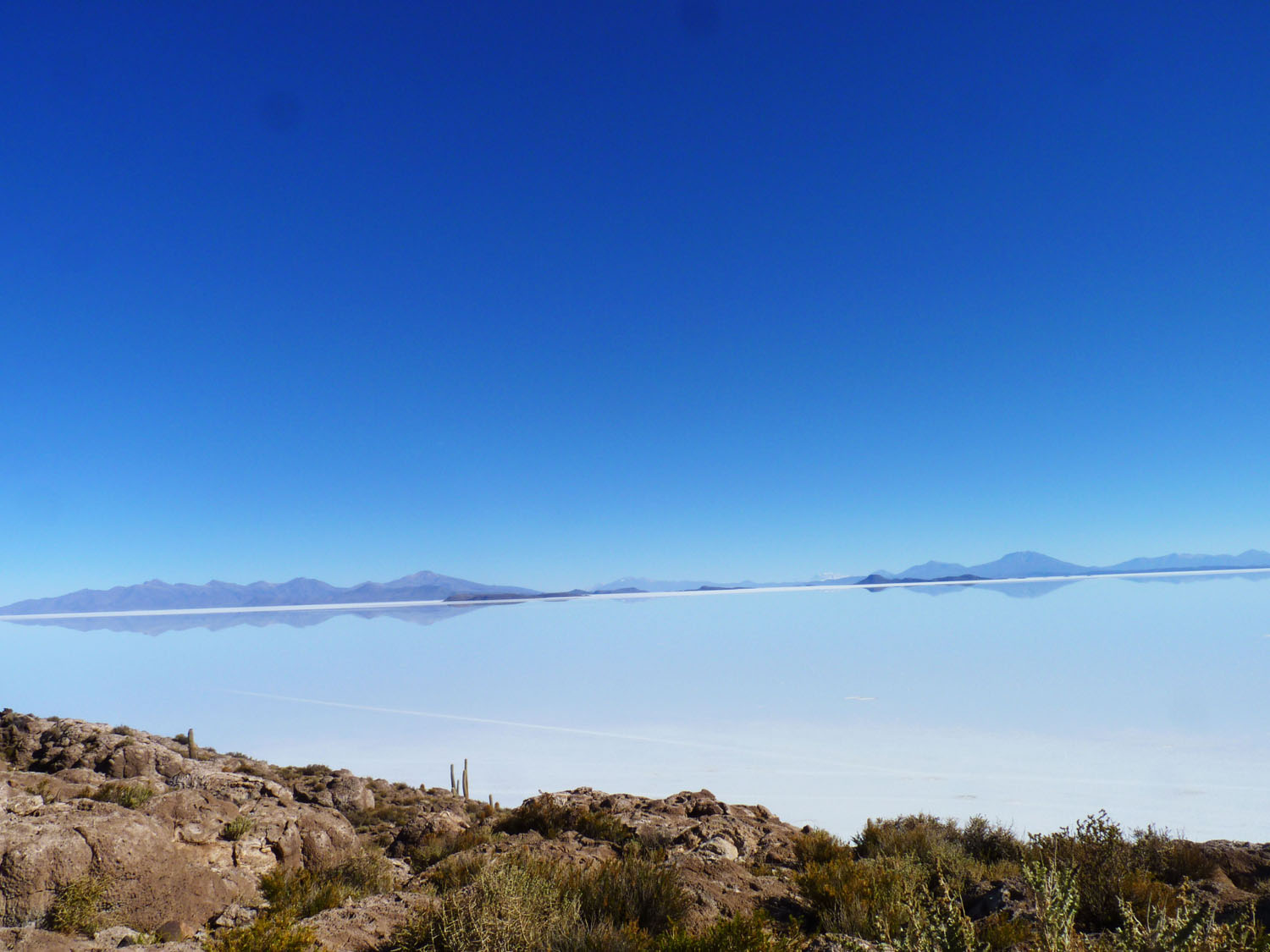
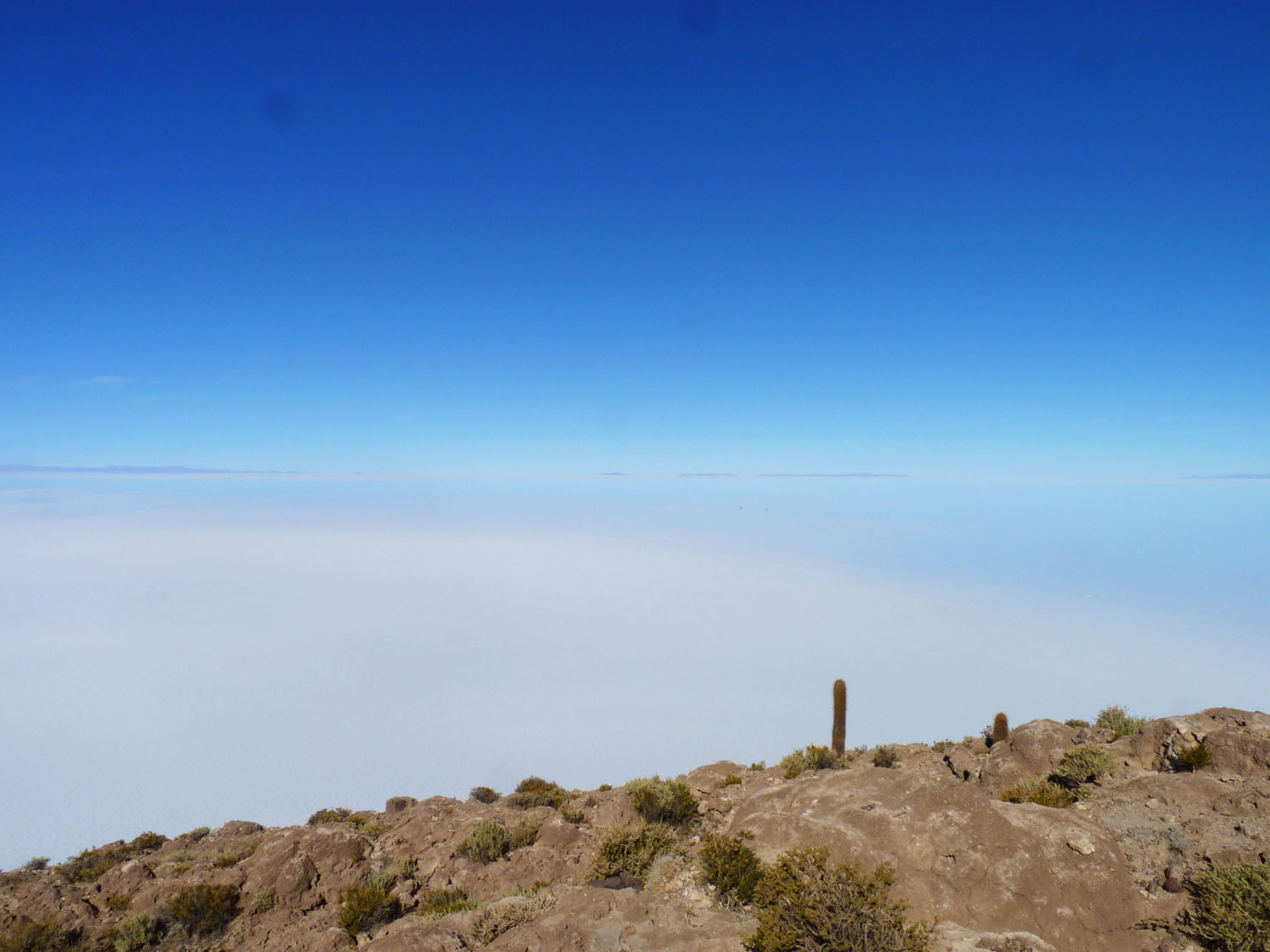
There really are few words, but driving across this was an incredible experience. It was kind of surreal, actually. And from atop this island, there was just a sea of endless white salt giving way to the mountains beyond.
Finally, after, we said goodbye to half of our group, and Kortnee, Amy, and I joined our Jeep mates for a beer and the next round in Copa America at the same restaurant. It was a quiet evening, and it was a bit sad saying goodbye to them, one by one.
Day five: well, that was just retracing our steps to get out of the country, watching the landscape change in reverse.
So there’s a brief of my first few days. What comes next? Oh, just Antofagasta, San Pedro de Atacama, Iquique, Copiapo, and La Serena.
 Jami Sheets